
AD
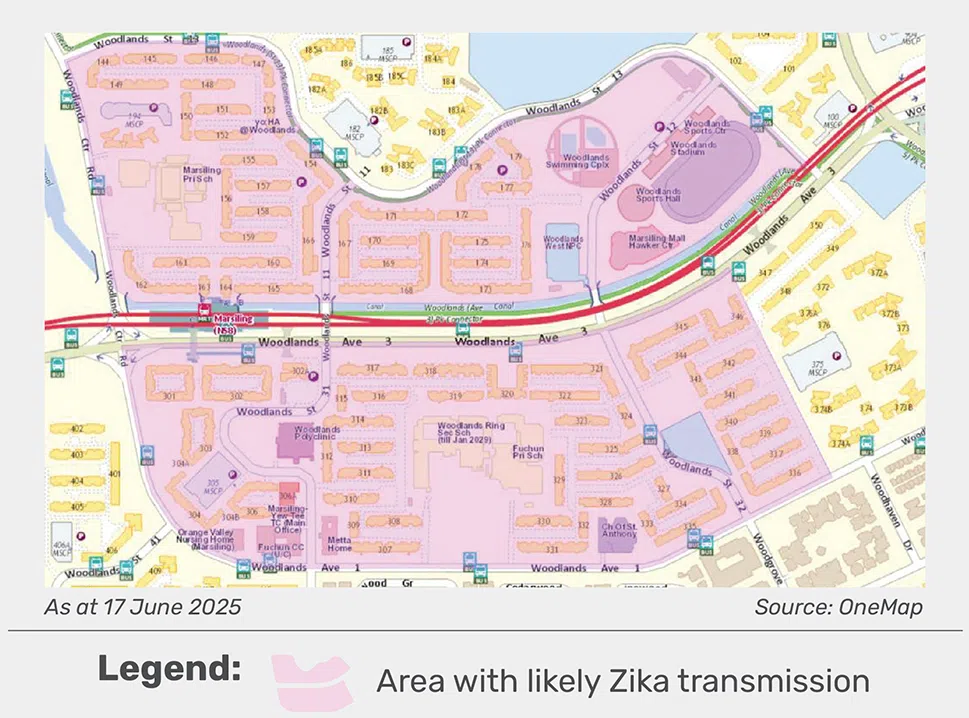
On June 19, the National Environment Agency (NEA) and the Communicable Diseases Agency (CDA) announced that two local Zika cases have been confirmed at Woodlands Street 11 and Street 32.
Following the notification of each case, NEA initiated wastewater and mosquito surveillance activities in the surrounding residential areas.
Enhanced surveillance efforts have detected persistent Zika virus signals in the area, indicating a high likelihood of Zika transmission in that area.
NEA regularly conducts surveillance to prevent the spread of vector-borne diseases in Singapore. This includes using gravitraps placed around Housing Board estates to capture the urban-dwelling and day-biting Aedes aegypti mosquitoes, which are known to transmit Zika and dengue.
As of June 12, a total of seven Zika cases have been reported in Singapore for the year 2026, with the most recent case confirmed on June 11. In 2024, there were 13 reported Zika cases locally.
NEA advises individuals showing symptoms suggestive of Zika infections to seek medical attention promptly. Symptoms may include rash, fever, conjunctivitis, muscle pain, joint pain, and headache.
While there is no specific treatment for Zika infections, pregnant women who are infected are urged to consult their obstetricians for appropriate management, as Zika can lead to congenital defects in infants, including neurological complications and microcephaly.
For more information on Zika cases, individuals can visit go.gov.sg/zikaclusters or the CDA's webpage at go.gov.sg/zika to learn about symptoms, prevention, and treatment options.
The Straits Times has reached out to NEA and the Ministry of Health for further details.


South Africa's HIV Vaccine Breakthrough Stalled as US Funding Freeze Halts Critical Research
JOHANNESBURG — In a high-tech Johannesburg laboratory, Nozipho Mlotshwa and her team were on the verge of a potential breakthrough in the decades-long quest for an HIV vaccine. Their latest formulation had just triggered promising immune responses in animal trials when an abrupt order from Washington froze all progress.

FDA Experts Unanimously Back JN.1-Targeted COVID Vaccines for 2026-2026 Season
In a decisive move to stay ahead of the evolving pandemic, US Food and Drug Administration (FDA) advisory panel members voted unanimously on Thursday (May 22) to recommend next-generation COVID-19 vaccines specifically designed to combat emerging JN.1 variant strains for the 2026-2026 immunization campaign.

World Oral Health Day: The Surprising Connection Between Gum Disease and Heart Health
March 20 marks World Oral Health Day - the perfect opportunity to explore how your dental hygiene impacts far more than just your smile. Emerging research reveals startling connections between oral health and overall wellbeing that might surprise you.

Singapore's Obesity Crisis: Why It's Rising and How to Fight Back
Singapore is facing a growing health challenge – obesity rates are climbing at an alarming rate, with serious implications for public health.

Beyond Baby Blues: The Hidden Struggles of Postpartum Depression and Workplace Challenges
The journey of motherhood is often painted with images of radiant joy and unconditional love. Yet for many women, this transformative chapter comes with unexpected emotional turbulence that goes far deeper than temporary "baby blues."

Breaking the Silence: Singapore Women's Struggle with Undiagnosed Sexual Health Issues
SINGAPORE – When 30-year-old Aisyah (name changed for privacy) found herself unable to consummate her marriage in 2022, she and her husband immediately recognized this wasn't just newlywed jitters.

MaNaDr Strengthens Teleconsultation Protocols After Licence Revocation
Following criticism over excessively brief teleconsultations, telehealth provider MaNaDr has announced stricter measures to enhance service quality and rebuild patient trust.

Rise of Unqualified Online "Counsellors" Sparks Mental Health Concerns in Singapore
Mental health professionals in Singapore are raising alarms over the growing trend of untrained individuals offering counselling services on digital platforms. Experts warn this phenomenon poses serious risks, including potential misdiagnosis, harmful advice, and violations of client confidentiality.

Scientists Discover Bat Virus with Similar Traits to Covid-19, But Risk of Human Spread Remains Low
Chinese researchers have identified a bat coronavirus that shares a key trait with the virus behind Covid-19—it uses the same ACE2 receptor to invade human cells. While this raises concerns about potential future transmission, experts caution against alarm, as the virus currently shows limited ability to infect humans.

Fluoride in Singapore: Should You Be Concerned About Its Effects?
A recent US study published in January has reignited debates about fluoride usage, particularly in water, after suggesting a possible link between higher fluoride exposure and lower IQ scores in children. The findings, featured in the Journal of the American Medical Association Pediatrics, have drawn criticism from some scientists who question the study's methodology while reaffirming fluoride's well-documented dental benefits.

WHO Nears Historic Pandemic Treaty Deal After Marathon Negotiations
GENEVA - After three years of intense negotiations, member states of the World Health Organization (WHO) are on the verge of finalizing a groundbreaking treaty to strengthen global pandemic preparedness, according to sources close to the talks. The discussions, which continued through Friday night into Saturday morning (April 12), have been temporarily paused until Tuesday as officials work to resolve remaining sticking points.

7 Budget-Friendly Dental Clinics in Singapore for Quality Care Without Breaking the Bank
We all know the golden rule: visit the dentist every six months for a checkup. But let's be honest—finding an affordable dentist in Singapore can feel like searching for a needle in a haystack. The good news? You don't always need to stick rigidly to that six-month schedule. If you're diligent about oral hygiene, stretching visits to once every 18 months or even two years is possible. Still, regular checkups are crucial to catch issues like cavities early before they turn into costly problems.


